Product Details
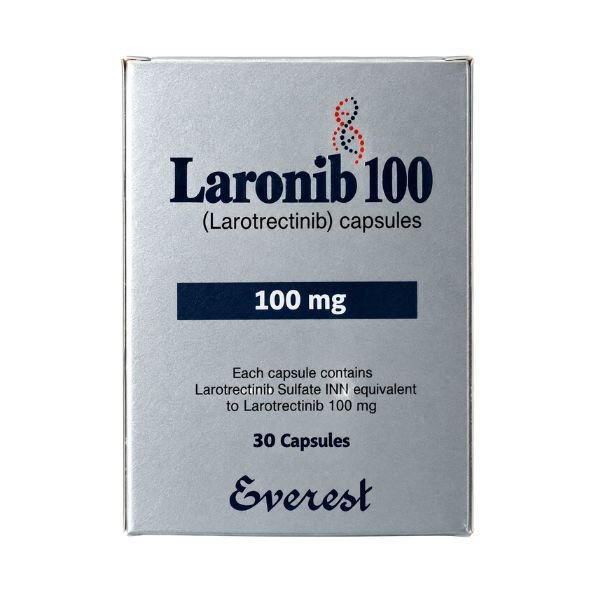
Laronib 100mg Larotrectinib Capsule Price in Pakistan
Laronib 100mg Capsules contain larotrectinib, a targeted kinase inhibitor that blocks TRKA, TRKB and TRKC proteins produced by NTRK gene fusions. Larotrectinib is used for eligible adults and children with solid tumors that have an NTRK gene fusion, particularly when the cancer is metastatic, surgery could cause severe morbidity, and there are no satisfactory alternative treatments or the disease has progressed after treatment.
Benefits / Uses
- Specifically targets TRK proteins associated with NTRK gene fusions.
- Used for eligible NTRK fusion-positive solid tumors.
- Can be used in both adult and pediatric patients when the treatment criteria are met.
- Provides a targeted treatment approach rather than conventional nonspecific chemotherapy.
Specifications
| Specification | Details |
|---|---|
| Brand | Laronib |
| Generic Name | Larotrectinib |
| Strength | 100mg |
| Dosage Form | Capsule |
| Route | Oral |
| Drug Class | TRK Kinase Inhibitor |
| Target | TRKA, TRKB & TRKC |
| Indication | NTRK gene fusion-positive solid tumors |
| Prescription Status | Prescription medicine |
The approved larotrectinib capsule strengths include 25mg and 100mg. Each 100mg capsule contains 100mg larotrectinib, equivalent to 123mg larotrectinib sulfate.
How To Use
Take Laronib exactly as prescribed by the treating oncologist. The FDA-approved adult and larger-body-surface-area pediatric dosage for larotrectinib is 100mg orally twice daily; dosing may differ for smaller pediatric patients or patients with certain medical conditions.
Swallow the capsule whole with water. Do not chew or crush the capsule. Dose adjustments may be required for liver impairment, adverse reactions, or interactions with certain medicines.
Why Choose Laronib 100mg?
- Contains larotrectinib, a targeted TRK inhibitor.
- Available as a convenient 100mg oral capsule.
- Designed for tumors with an identified NTRK gene fusion.
- Can be used across adult and pediatric populations when prescribed according to the approved treatment criteria.
Important: Laronib/larotrectinib is a specialist prescription cancer medicine. Treatment should be based on appropriate molecular testing for an NTRK gene fusion and supervised by a qualified oncologist. Larotrectinib can cause adverse effects including liver enzyme abnormalities, dizziness, fatigue and neurological effects, and it has important drug-interaction considerations.